

Accurate pricing is essential in modern logistics, where speed and precision directly affect profitability. Companies can no longer rely on manual tools to produce consistent freight quotes.
The best freight quoting software helps automate calculations, improve rate management, and give teams clear visibility into changing freight rates.
With advanced freight quoting software, freight forwarders can streamline workflows, reduce errors, and compare rates quickly, allowing them to respond faster while protecting margins in a competitive global market.
10 Best Freight Quoting Software Platforms for Logistics Teams
Logistics teams need digital tools that simplify rate management, reduce manual work, and standardize freight quotes. Modern freight forwarding software helps freight forwarders analyze and compare rates and maintain consistent pricing across shipments. The platforms below are some of the best AI tools for freight forwarders that help transform rate management into a faster, more reliable process that supports scalable logistics operations.
1. Wisor
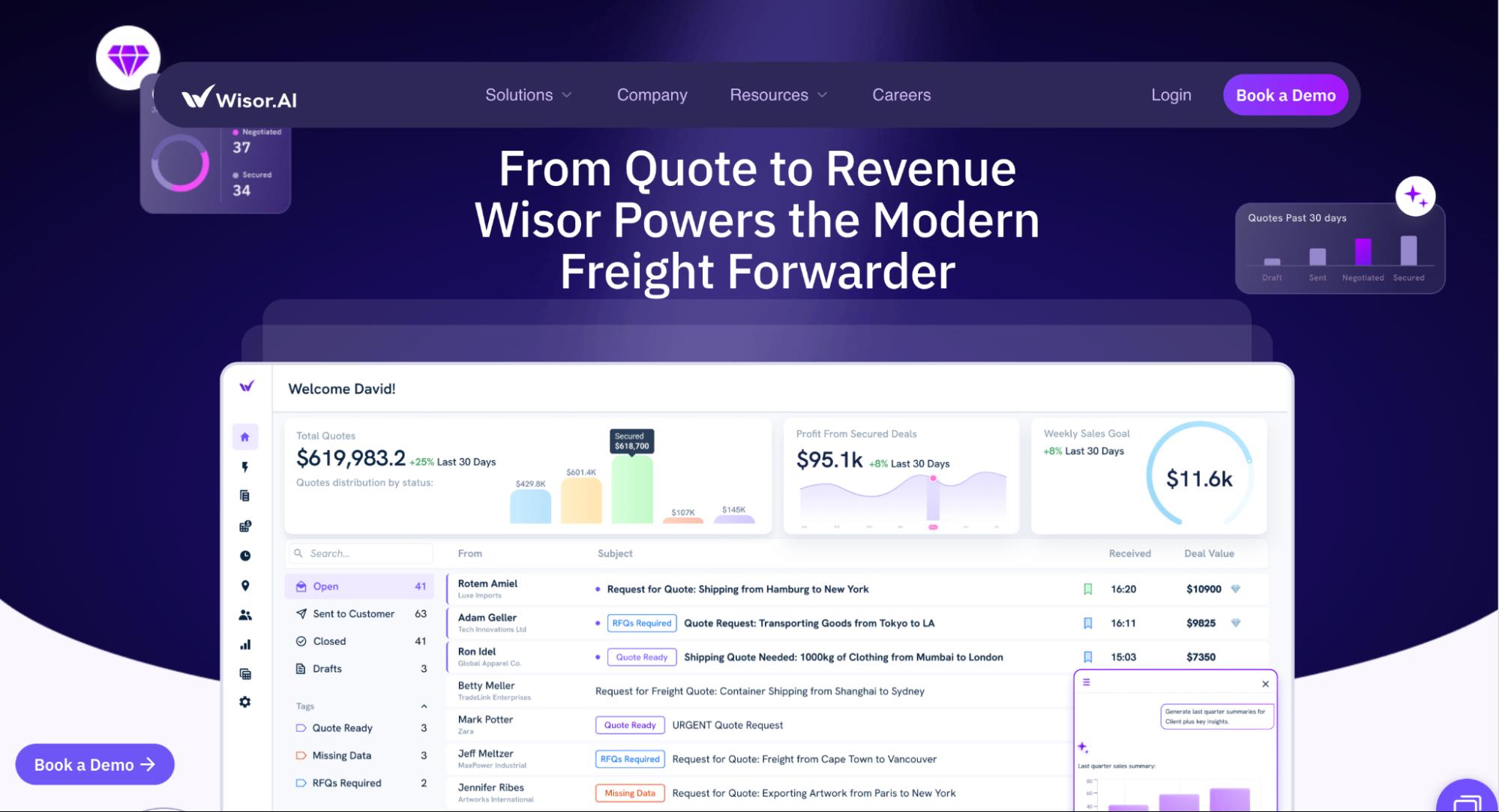
Wisor is designed to automate complex rate management workflows using AI-driven data processing. The platform gathers carrier contracts, historical shipments, and live market inputs to generate accurate freight quotes with minimal manual work.
By embedding intelligence into daily operations, Wisor allows freight forwarders to compare rates instantly and react to changing rates without rebuilding spreadsheets. Teams can scale quoting volume while maintaining control, making it a strong example of modern freight software built for speed, accuracy, and operational consistency in high-demand logistics environments.
Best for: Automation-first organizations looking to modernize pricing workflows.
2. Freightos WebCargo
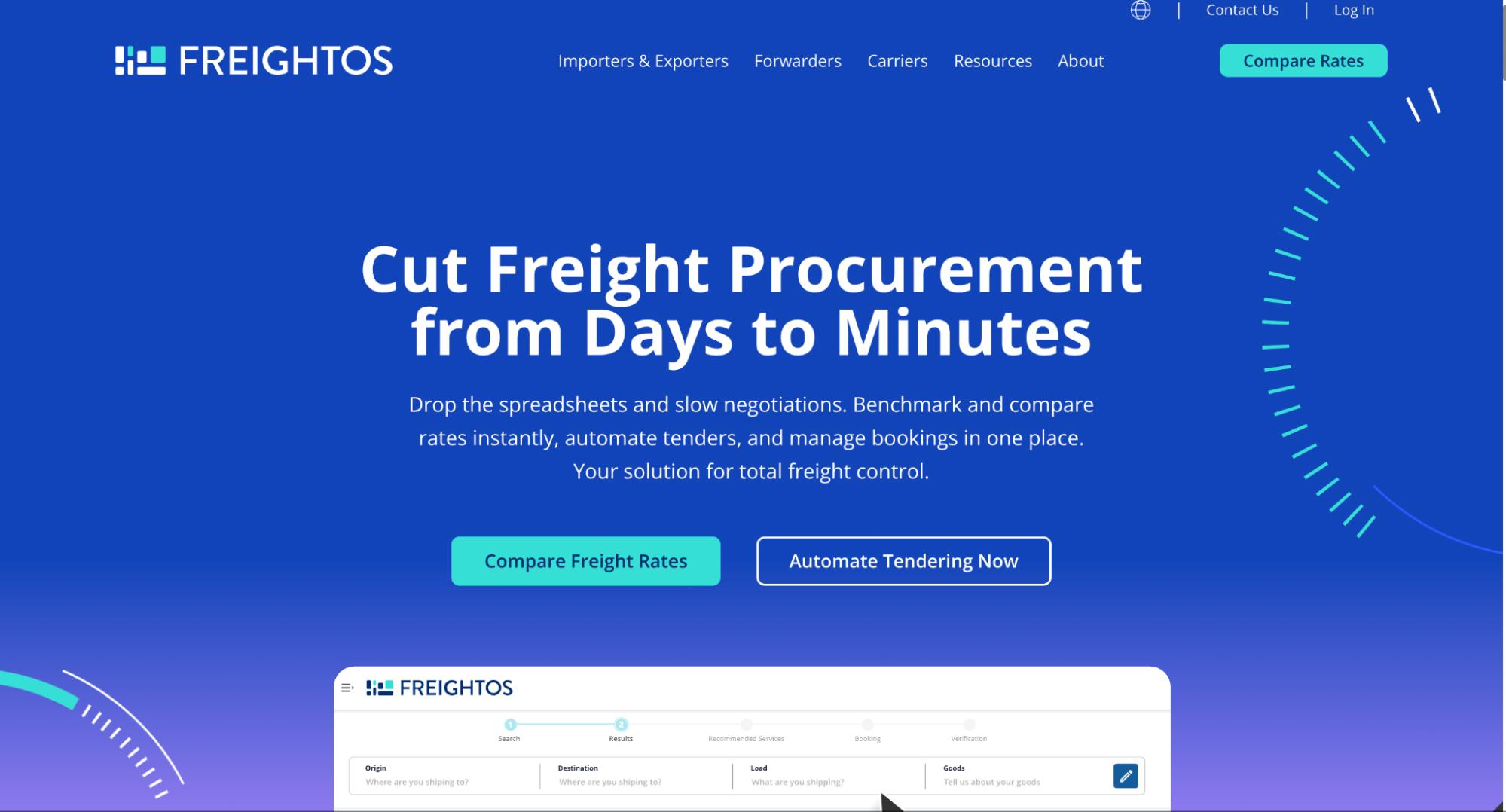
Freightos WebCargo focuses on digital connectivity between logistics providers and carriers, enabling faster access to live freight rates through a unified interface. It reduces email-based pricing requests and strengthens rate management by placing carrier data into structured workflows. Users can generate reliable freight quotes, compare rates across services, and maintain transparency throughout the pricing process.
For companies handling frequent spot shipments, Freightos supports agile decision-making while ensuring rate management remains standardized, trackable, and aligned with current market conditions.
Best for: Teams that rely on real-time carrier pricing and rapid turnaround.
3. CargoWise
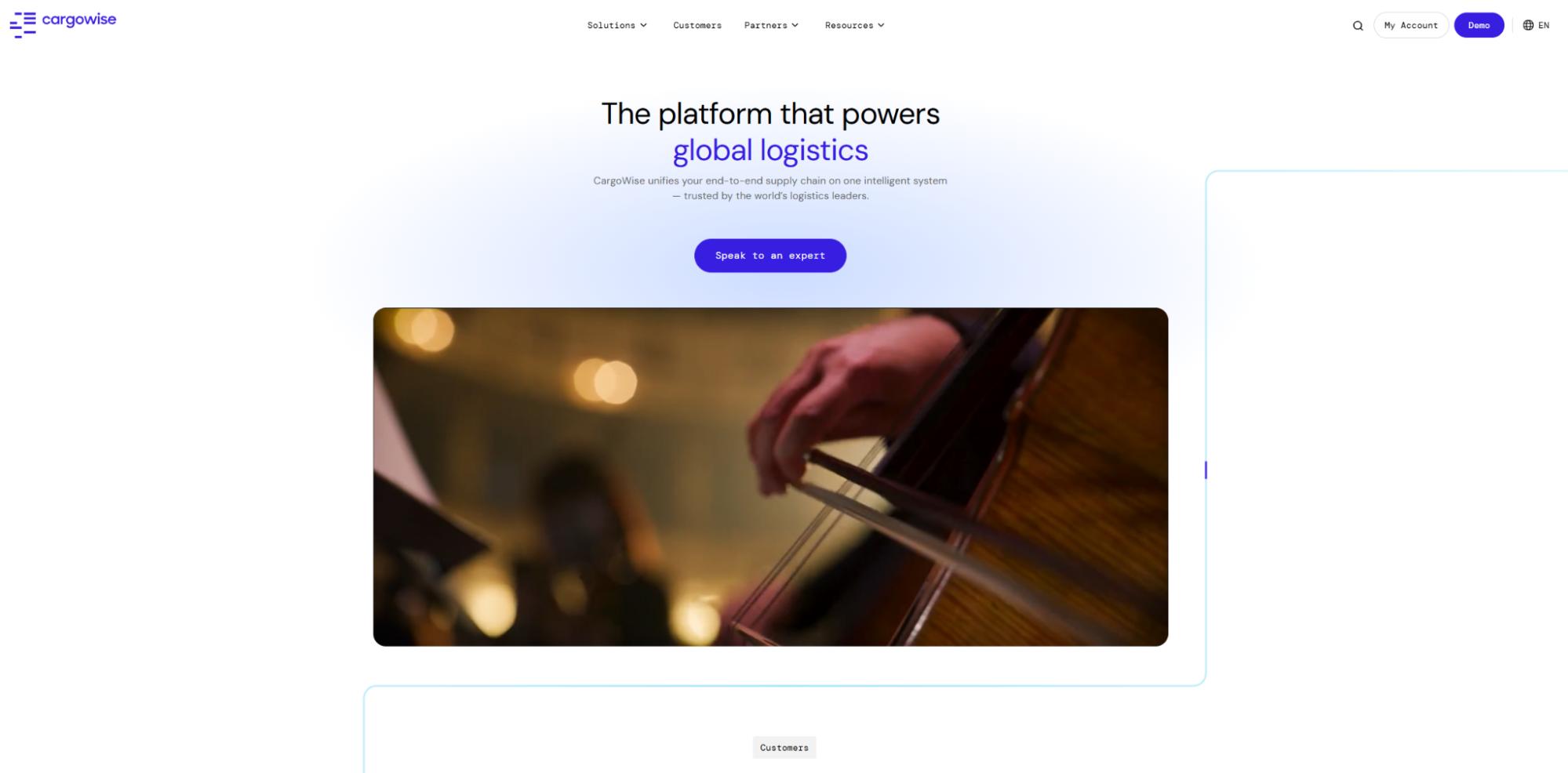
CargoWise integrates quoting into a broader logistics ecosystem, combining execution, compliance, and rate management within a single platform. It is a comprehensive freight software that allows forwarders to build detailed quotes while aligning pricing directly with operational data.
Because shipment execution and pricing share the same environment, teams gain tighter control over freight rates and long-term rate management strategies. The system supports global logistics complexity, helping organizations maintain consistency across offices, regions, and transport modes without losing visibility into how rates are calculated or applied.
Best for: Large enterprises managing global forwarding operations.
4. Magaya
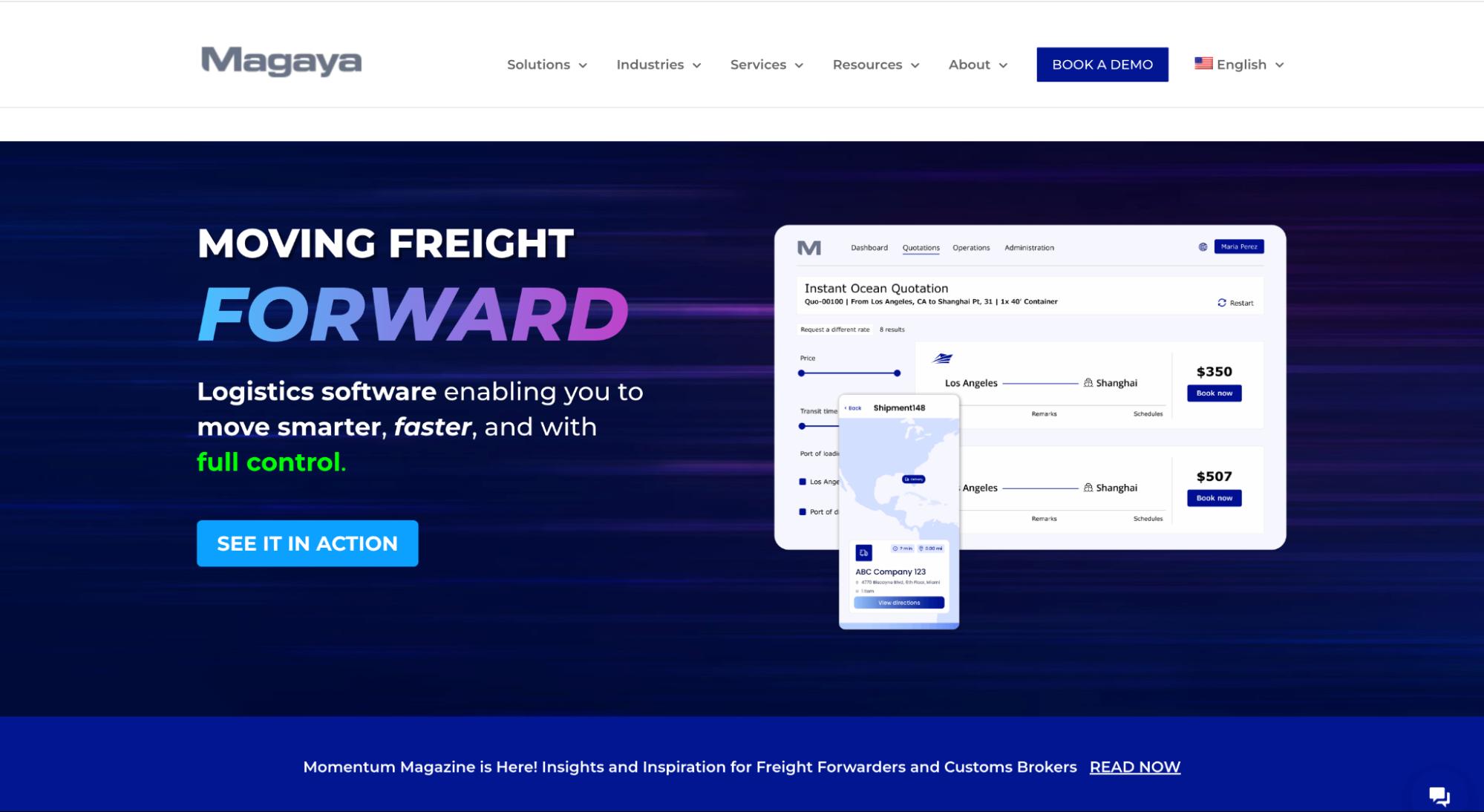
Magaya provides an integrated logistics suite where accounting, operations, and rate management function together to support accurate freight quotes. It enables users to store contract data, automate calculations, and compare rates across shipments without switching systems. By linking pricing with financial visibility, companies gain stronger control over margins and cost allocation.
Many mid-sized logistics providers adopt Magaya because it balances usability with structured rate management, helping them professionalize their quoting process, while continuing to scale services and shipment volumes confidently.
Best for: Growing logistics providers seeking an all-in-one operational and pricing system.
5. Descartes Rate Management
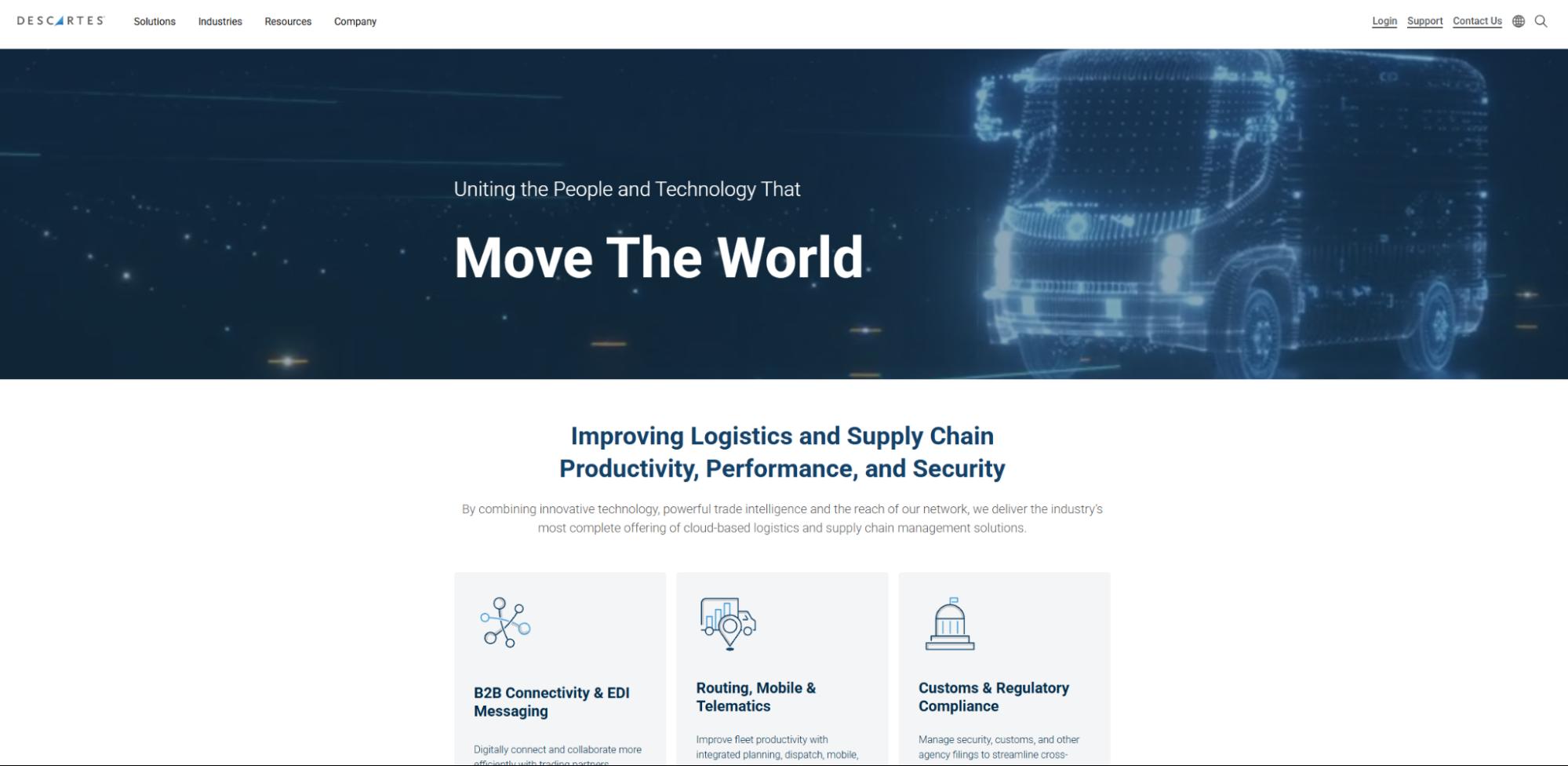
Descartes emphasizes structured rate management designed for organizations that need governance and consistency across large transportation networks. The platform centralizes tariffs, contracts, and surcharges, allowing teams to produce standardized freight quotes while maintaining visibility into fluctuating freight rates.
As part of a broader logistics technology ecosystem, Descartes supports repeatable processes and audit-ready pricing data. Companies benefit from the ability to compare rates, enforce procurement rules, and ensure every quote aligns with established policies, reducing risk while improving efficiency.
Best for: Enterprises prioritizing control, compliance, and standardized pricing frameworks.
6. MercuryGate (Infios)
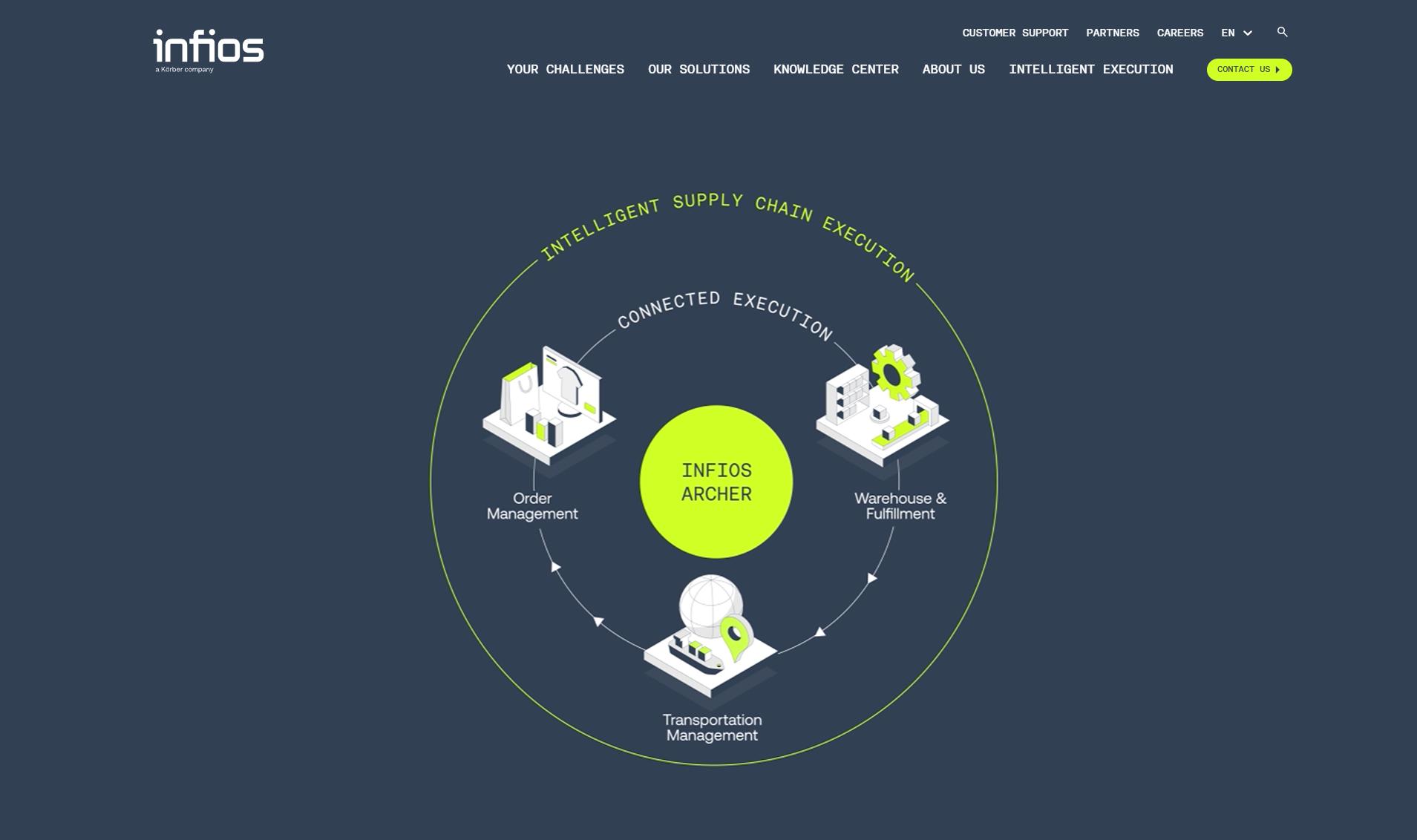
MercuryGate, now named Infios after its merger with Körber Supply Chain Software, delivers a transportation management-focused approach to rate management, connecting procurement, planning, and quoting into one workflow.
The platform enables logistics teams to evaluate rates, optimize routing, and generate accurate freight quotes using centralized data. This freight software is especially useful for organizations managing multimodal shipping because it allows users to compare rates across truckload, LTL, ocean, and air services.
By aligning pricing decisions with execution planning, MercuryGate (Infios) helps companies create more predictable cost structures and stronger operational coordination.
Best for: Shippers and 3PLs managing complex, multimodal transportation networks.
7. Shipwell
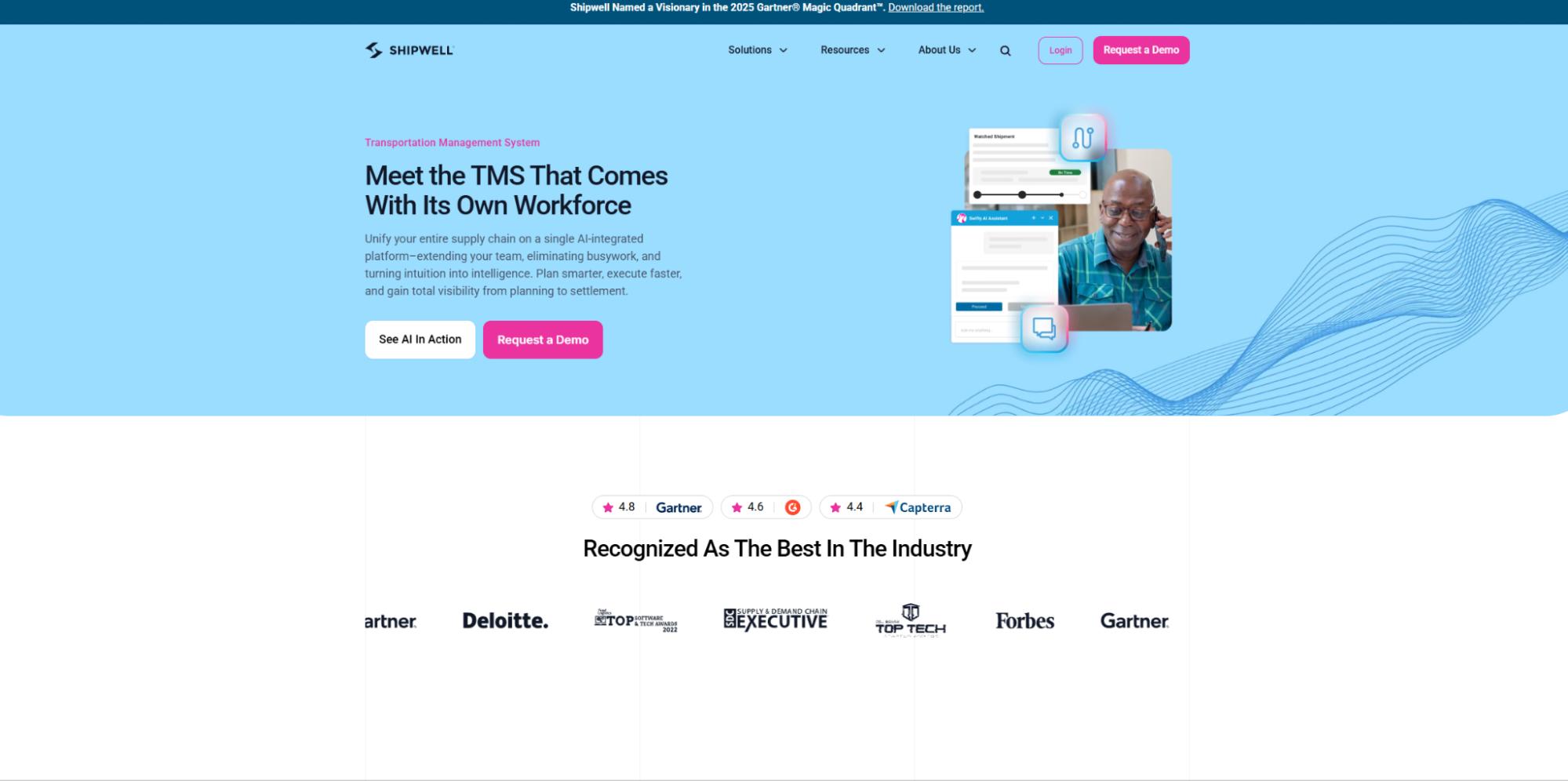
Shipwell combines visibility and rate management capabilities to help logistics teams respond to disruptions while maintaining accurate freight quotes. The platform integrates real-time tracking with pricing data, allowing users to evaluate freight rates alongside operational performance.
This connected freight forwarding software supports faster collaboration between departments and makes it easier to compare rates when conditions change. By linking execution insights with quoting processes, Shipwell enables companies to refine decisions continuously and ensure pricing reflects actual transportation dynamics.
Best for: Organizations that want visibility data to directly inform quoting accuracy.
8. Alpega TMS
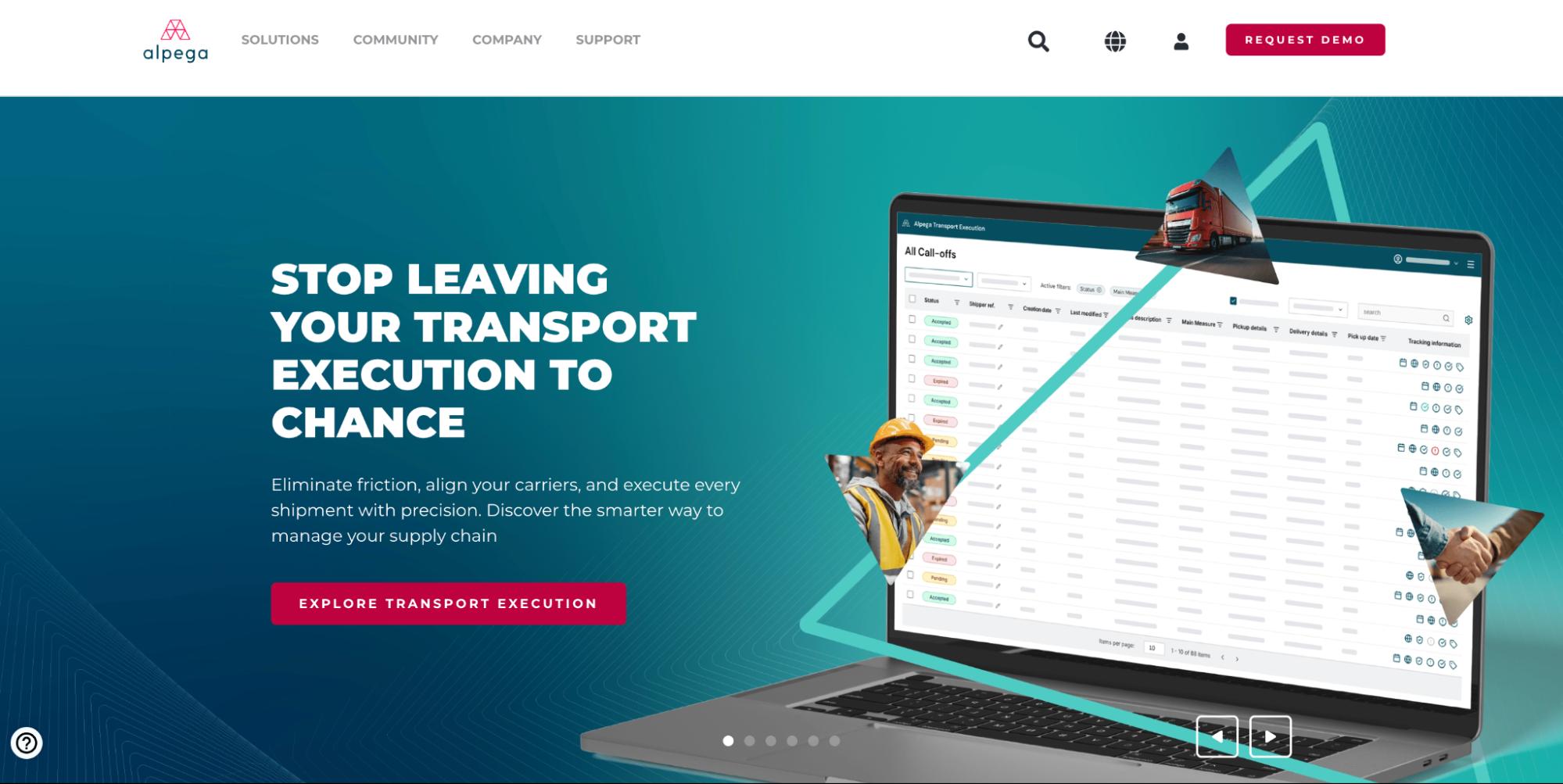
Alpega TMS focuses on transportation procurement and collaborative rate management, giving logistics teams tools to manage carrier relationships and pricing events digitally. Users can consolidate contracts, automate calculations, and issue consistent freight quotes through a single rate management tool.
Alpega TMS enables companies to compare rates efficiently while maintaining transparency with partners. Its network-driven model supports strategic sourcing and helps logistics providers maintain competitive rates without sacrificing control over procurement workflows.
Best for: Networks that depend on collaboration between shippers, carriers, and logistics providers.
9. BlueBox Systems
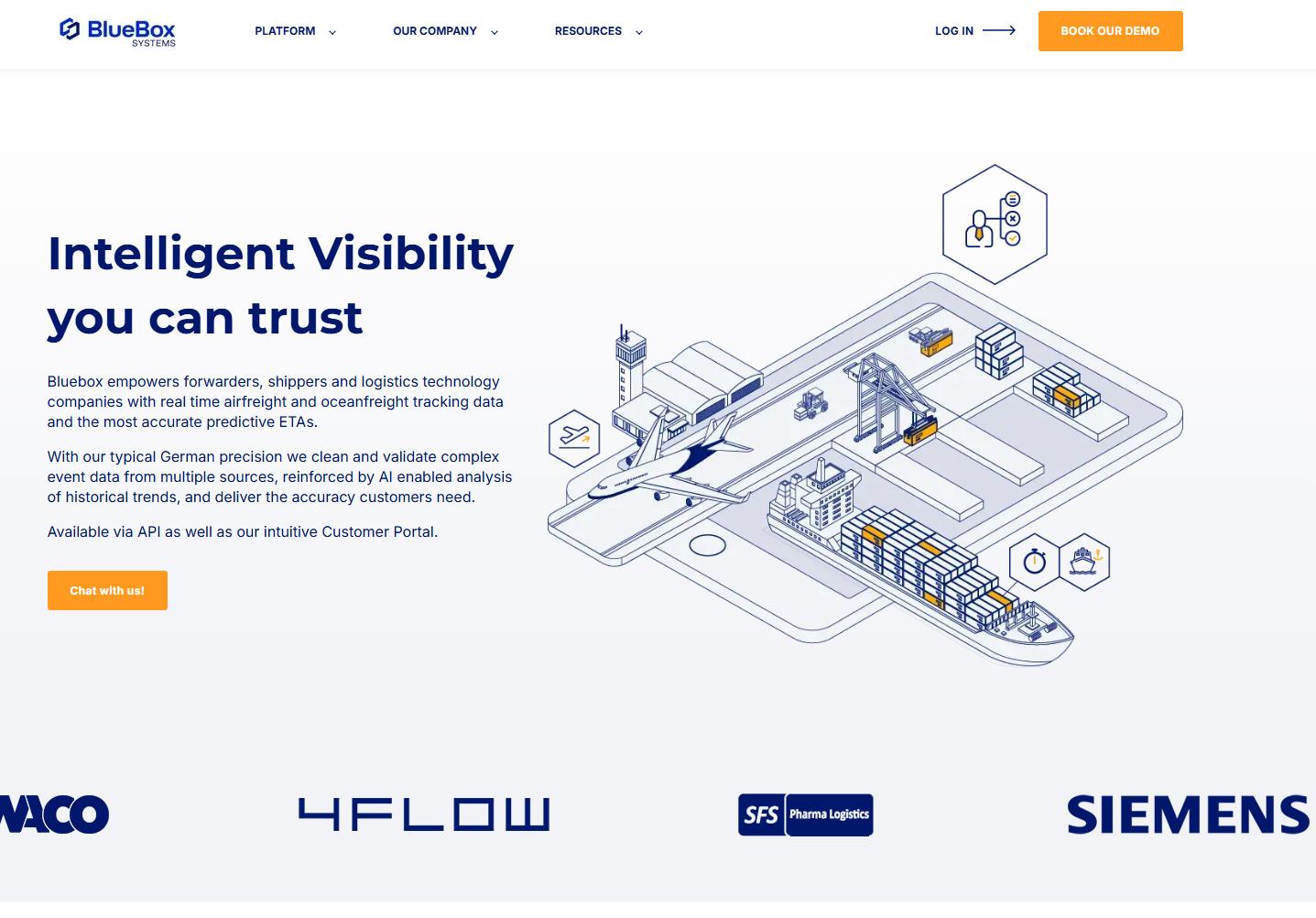
BlueBox Systems emphasizes data visibility as a foundation for better rate management, helping logistics teams align shipment intelligence with pricing strategies. By analyzing transit performance and shipment flows, users can refine quotes and better understand how operational variables influence freight rates.
This specialized freight software complements existing systems by adding analytics that allow teams to compare rates with greater context. The result is a more informed quoting process that reflects real-world logistics behavior rather than static assumptions.
Best for: Data-driven teams looking to enhance pricing accuracy through visibility insights.
10. Flexport Platform
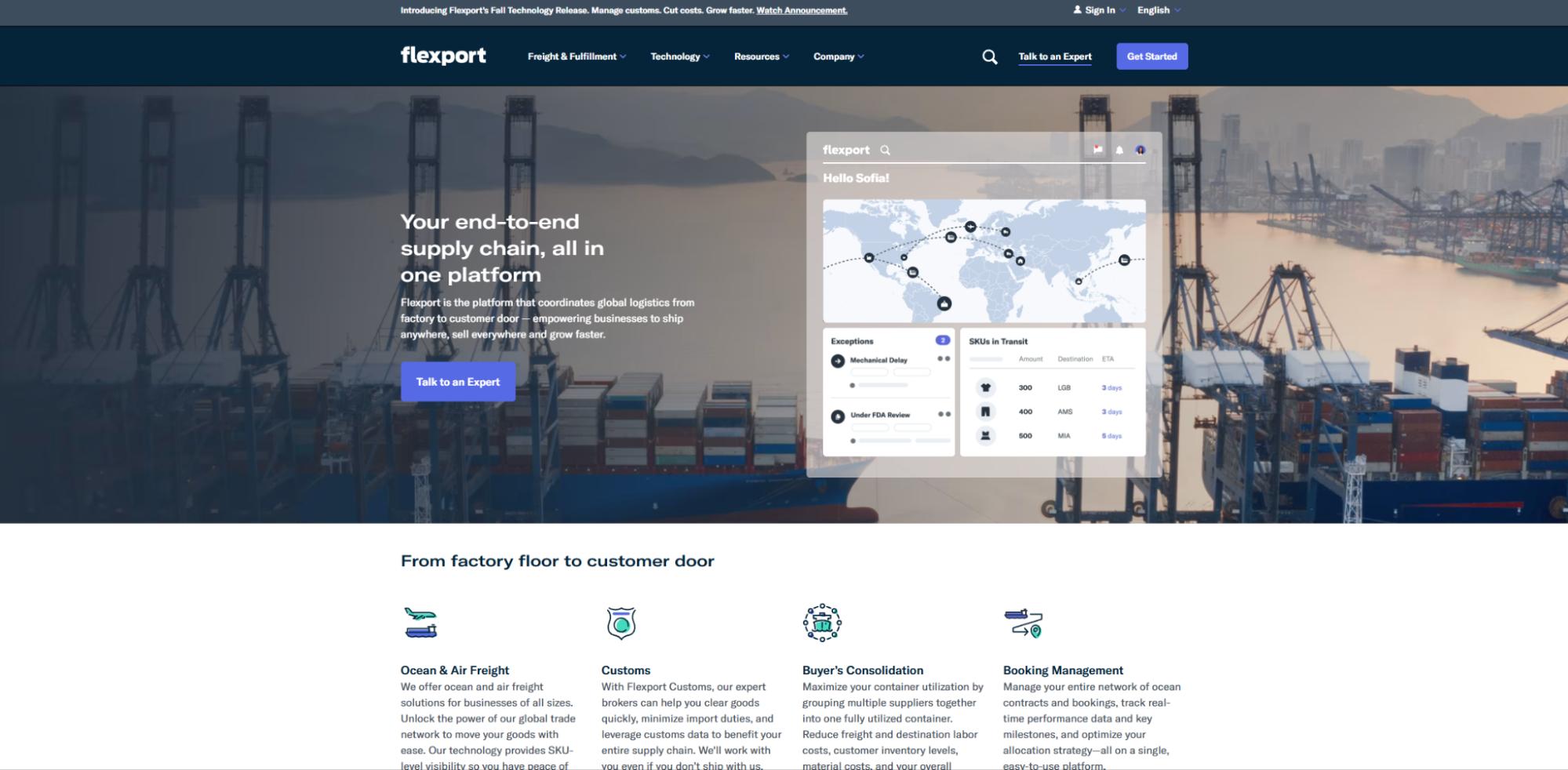
Flexport combines digital forwarding services with integrated freight forwarding software, creating an environment where booking, execution, and rate management coexist. Users can manage shipments, access structured freight rates, and generate synchronized freight quotes without relying on disconnected tools.
The platform’s model supports end-to-end coordination, enabling freight forwarders to compare rates, maintain standardized rate management, and adapt quickly to global shipping changes. This blend of service and technology appeals to companies seeking both operational support and modern digital infrastructure.
Best for: Businesses that want a technology-enabled forwarding partnership.
Freight Quoting Software Comparison Overview
Each platform offers different strengths in rate management, modal coverage, and pricing automation. This overview helps logistics teams see how these tools support daily quoting, improve visibility into freight rates, and generate faster, more consistent freight quotes:
|
Tool |
Supported Freight Modes | Key Pricing Capabilities |
Best For |
| Wisor | Air, ocean, and road | AI-driven automation, centralized data, and predictive rate management | Teams seeking automation and faster quote turnaround |
| Freightos WebCargo | Air and ocean, with integrated carrier connections | Real-time pricing access to compare rates and speed up quoting | Companies needing live carrier pricing |
| CargoWise | Air, ocean, road, and rail | Enterprise-grade rate management tied to operations and compliance | Large global logistics providers |
| Magaya | Air, ocean, and road | Integrated quoting, accounting, and workflow-based pricing control | Growing forwarders needing an all-in-one system |
| Descartes Rate Management | Multimodal, including parcel and intermodal | Structured tariff management and standardized pricing workflows | Enterprises focused on governance and accuracy |
| MercuryGate (Infios) | Truckload, LTL, air, ocean, and rail | Optimization tools that align transportation planning with pricing | Shippers managing complex transport networks |
| Shipwell | Multimodal with strong truckload focus | Visibility-linked rate management and dynamic pricing adjustments | Teams that want execution and quoting connected |
| Alpega TMS | Road-focused with multimodal support | Collaborative procurement and benchmarking to compare rates | Shippers managing dense regional networks |
| BlueBox Systems | Primarily air and ocean visibility integrations | Analytics-driven insights that refine quoting accuracy | Data-driven organizations enhancing pricing decisions |
| Flexport Platform | Air, ocean, and road | Integrated forwarding and digital rate management workflows | Businesses wanting a tech-enabled forwarding model |
Key Features to Look for in Freight Quoting Software
Selecting the right platform requires more than fast calculations. Logistics teams should focus on capabilities that strengthen freight rate management, improve accuracy in freight quotes, and create visibility into changing freight rates across the supply chain. The features below define what modern freight forwarding software must deliver to stay competitive in 2026:
- Multi-Carrier Rate Aggregation: The ability to pull pricing from multiple carriers into one dashboard is essential for efficient rate management. Instead of checking separate portals, teams can compare rates instantly and build accurate quotes using centralized data. This reduces manual errors and gives freight forwarders a complete market view before making pricing decisions.
- Real-Time and Contract Rate Management: Strong platforms combine live market pricing with stored contract agreements to create balanced rate management strategies. This ensures quotes reflect both negotiated terms and current rates, allowing freight forwarders to stay competitive while protecting margins. A system that continuously updates pricing prevents outdated data from affecting decisions.
- Automated Spot Quote Generation: Automation allows teams to generate spot freight quotes in seconds by applying predefined rules, surcharges, and routing logic. This reduces reliance on spreadsheets and transforms rate management into a repeatable process. As demand fluctuates, automation helps logistics providers respond quickly without sacrificing pricing accuracy.
- Margin Control and Markup Logic: Built-in financial controls allow companies to apply consistent markups, discounts, and business rules within the rate management tool. This ensures every quote aligns with profitability targets while still reflecting competitive freight rates. Clear margin visibility also helps freight brokers and forwarders avoid underpricing services.
- Support for Ocean, Air, and Ground Freight: Modern logistics rarely relies on a single mode. An effective freight software must handle multimodal pricing so users can manage shipments across ocean, air, and trucking from one interface. This unified approach simplifies rate management and produces consistent quotes regardless of transport type.
- Integration with TMS, ERP, and Booking Systems: Seamless integration allows freight forwarding software to exchange data with transportation management, accounting, and booking platforms. Connected systems eliminate duplicate entry, strengthen rate management, and ensure finalized quotes flow directly into execution workflows, creating a faster and more reliable logistics operation.
How to Choose the Best Freight Quoting Software for Your Business
Selecting the right platform depends on operational needs, shipment complexity, and team workflows. Logistics providers should evaluate software that aligns with their primary freight modes, carrier access, pricing flexibility, and ability to scale. The table below breaks down the key considerations and what to look for when choosing freight forwarding software to generate accurate freight quotes and maintain effective rate management.
|
Consideration |
Key Questions | What to Look For |
Best For |
| Primary Freight Modes and Trade Lanes | Which modes – ocean, air, road, rail – do we use most? Are our shipments mostly domestic or international? | Support for all relevant transport types and common trade lanes; ability to produce accurate freight quotes across modes | Companies with mixed-modal operations or global forwarding needs |
| Carrier and Rate Source Coverage | How many carriers are included? Are contract and spot freight rates supported? | Multi-carrier connectivity, frequent updates, and centralized rate aggregation; capacity to compare rates across providers | Teams requiring fast, comprehensive market visibility |
| Pricing Flexibility and Margin Controls | Can the system handle variable markups, discounts, or negotiated rates? | Built-in margin logic, flexible pricing rules, and automated profit calculations | Forwarders or freight brokers focused on consistent profitability |
| Workflow Automation and Sales Enablement | Does the software automate quoting, approvals, or booking processes? | Spot quote generation, integration with TMS/ERP, and tools that enable sales teams to act faster | Organizations looking to reduce manual entry and speed up quote-to-booking cycles |
| Scalability Across Teams and Regions | Can the system support multiple offices, users, and regional requirements? | Multi-user support, cloud-based access, regional rate management, and centralized reporting | Growing logistics companies or enterprise teams expanding globally |
Pricing of Freight Quoting Software
Understanding costs is essential before adopting any freight forwarding software. Pricing models vary widely, and logistics teams must evaluate whether the investment in automation, accuracy, and rate management will deliver measurable returns in faster and more reliable freight quotes.
Subscription vs Usage-Based Pricing
Freight quoting platforms use subscription or usage-based pricing. Subscription charges a fixed fee for full access to freight software, rate management, and integrations. It suits large teams with high quoting volumes because costs are predictable.
Usage-based pricing charges per quote or carrier connection, ideal for smaller or fluctuating-volume providers. Both models support automation, multiple carrier aggregation, and faster, more accurate quoting.
Is Freight Quoting Software Worth the Cost?
Freight quoting software improves accuracy, speed, and efficiency. Freight forwarders can automate rate management, generate reliable quotes, and quickly compare rates across carriers. Reduced manual work and faster quote turnaround often outweigh subscription or usage fees, making these platforms a worthwhile investment for scalable, data-driven logistics operations.
Why Wisor Stands Out as a Freight Quoting Platform
Wisor helps logistics teams generate accurate freight quotes faster by centralizing carrier data, automating rate management, and using AI for pricing optimization. It supports complex, multimodal shipments while keeping workflows efficient and scalable for global operations.
- Unified Access to Carrier Rates Across Modes: Wisor consolidates pricing from air, ocean, and road carriers in one platform, enabling freight forwarders to compare rates and generate consistent quotes across multiple transport modes.
- AI-Powered Pricing and Quote Optimization: The platform uses artificial intelligence to analyze historical data, contracts, and market trends, improving rate management accuracy and ensuring optimized, competitive pricing.
- Fast, Sales-Ready Quote Creation: Automation allows teams to produce ready-to-send quotes in seconds, reducing manual work and improving response times for sales and customer service teams.
- Built for Freight Forwarders and Logistics Providers: Wisor is tailored to the workflows of forwarders and brokers, centralizing rate management, multi-carrier pricing, and contract data into a single operational environment.
- Designed to Scale Global Quoting Operations: The platform supports multiple offices, users, and regions, making it suitable for large logistics companies needing reliable, standardized freight quotes worldwide.
Conclusion
Investing in the best freight automation tools transforms how logistics teams manage pricing, speed, and accuracy. Platforms like Wisor and other top solutions centralize rate management, automate freight quotes, and provide visibility across multiple carriers and transport modes.
For freight forwarders and brokers, this means faster responses, consistent pricing, and reduced manual work. Modern freight software not only streamlines operations but also supports scalability, margin control, and data-driven decision-making.
Choosing the right platform ensures teams can generate reliable quotes, compare rates efficiently, and maintain a competitive edge in an increasingly complex global logistics environment.