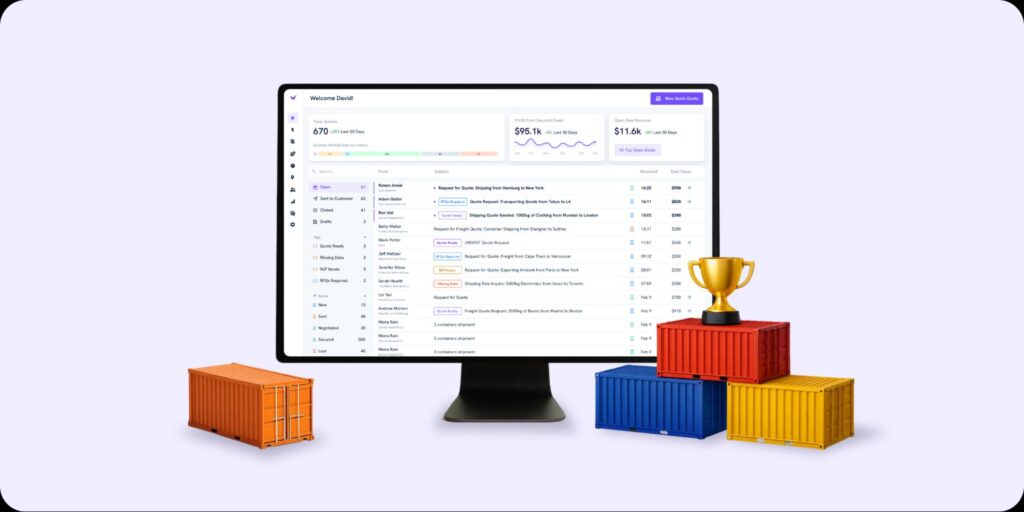


Freight teams today are under pressure to cut delays, reduce manual work, and keep margins healthy. This is where freight automation tools make a real difference: they connect data across the supply chain and turn repetitive, error-prone tasks into stable, predictable workflows.
These platforms help freight forwarders manage quotes, bookings, and document management from a single place, instead of jumping between spreadsheets and email. Because they integrate smoothly with existing systems, they improve daily operations without forcing teams to rebuild their tech stack.
Above all, these tools boost operational efficiency across every step of the shipment lifecycle – from rate search to final delivery. As 2025 brings tighter budgets and rising demand, logistics teams are turning to focused solutions that support the full supply chain and make work easier to track, measure, and improve.
8 Best Freight Automation Tools for Modern Logistics Teams
Modern logistics teams rely on freight automation tools to streamline operations and reduce excessive manual work. These platforms help freight forwarders automate quoting, booking, document management, and tracking, while integrating cleanly with their existing systems.
We’ve compiled a list of the best AI-driven tools for freight forwarders today, covering different categories and use cases. While each platform serves a specific purpose, they all share the same goal: improving efficiency and strengthening both carrier and customer relationships.
1. Wisor
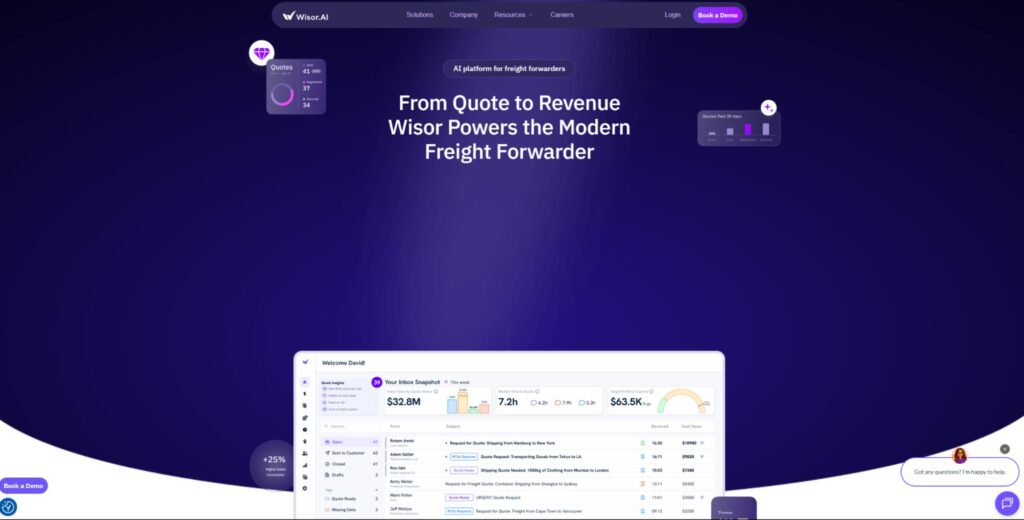
Wisor is a freight forwarding software designed to eliminate manual work through automated rate searches, quoting, and routing. Its advanced engine pulls rates from carriers, consolidators, and internal contracts, then builds quotes that align with target margins.
Teams value Wisor because it replaces slow email chains with structured, automated workflows. Every update stays in one place, which makes handoffs between sales, operations, and finance smoother and more transparent.
Wisor also integrates easily into existing systems. Freight forwarders can deploy Wisor with minimal training and no downtime, keeping day-to-day operations stable while improving accuracy at the same time.
Best for: Freight forwarders needing fast quoting and simpler workflows without replacing their current TMS.
2. CargoWise

CargoWise is a comprehensive logistics platform that brings forwarding, customs, warehousing, and compliance together in a single environment.
It’s especially well-suited for large teams that need to unify documentation, track cargo across the supply chain, and automate repetitive tasks at scale. The system removes duplicate work by linking every job, document, and vendor record, while its global compliance tools help operators avoid errors in cross-border operations.
Carriers, brokers, and forwarders rely on CargoWise for a consistent, end-to-end workflow – from booking to settlement. This level of standardization helps teams scale faster without losing control.
Best for: Operators managing complex, multimodal global supply chains.
3. Flexport Platform
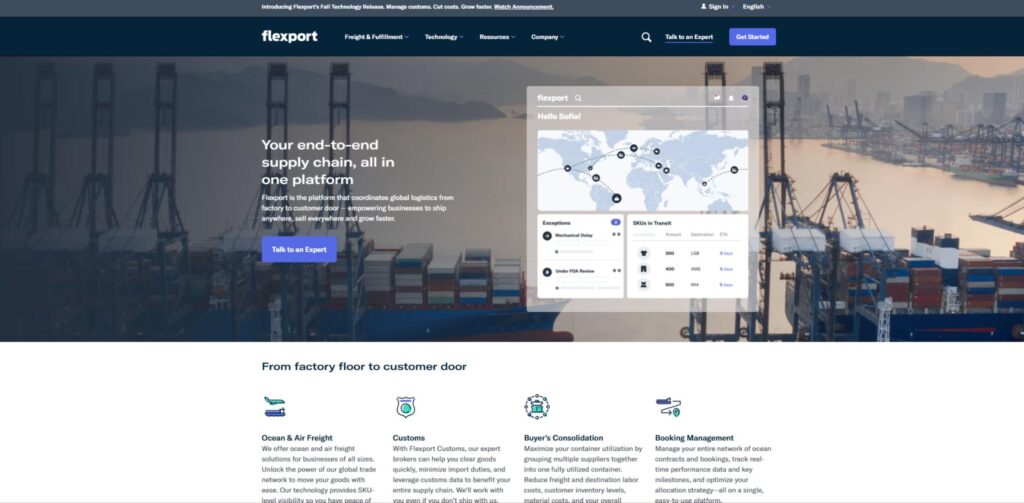
Flexport combines modern freight forwarding with a connected workspace that centralizes shipments, documents, and analytics.
Its focus on automation gives teams powerful tools to track containers, plan bookings, and follow updates without chasing email threads. The main dashboard provides a clear, real-time view of supply chain status, helping forwarders and shippers avoid scattered data and keep planning simple.
Predictive tracking tools reduce delays and improve decision-making during peak seasons, while shared workspaces give partners a single place to collaborate on shipments and exceptions.
Best for: Companies seeking modern workflows and strong visibility.
4. Magaya Digital Freight Platform
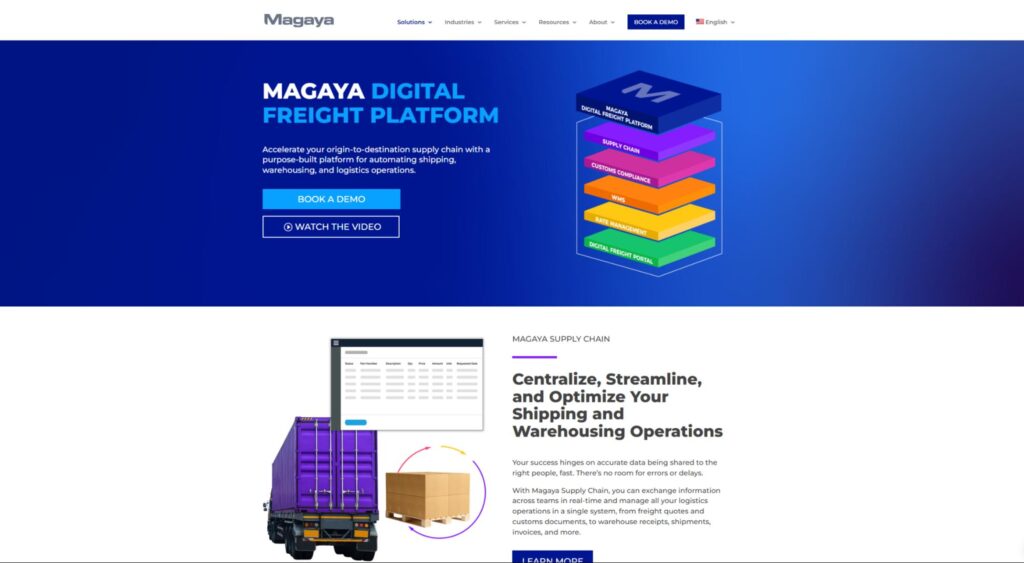
Magaya offers a unified system that blends forwarding, warehouse operations, rate management, and compliance.
Teams use Magaya to manage quotes, bookings, documentation, and storage without constantly switching between apps. Its customer portal allows clients to monitor the supply chain and track shipments easily, while e-invoicing and automated status updates keep communication clear and timely.
Freight forwarders appreciate the integrated WMS and compliance tools, which reduce errors and keep operations running smoothly. Magaya’s strong focus on automation cuts manual steps and helps forwarders operate more efficiently.
Best for: Mid-size forwarders and 3PLs needing a unified suite.
5. Descartes Systems Group
Descartes provides advanced automation across multiple logistics domains, including visibility, compliance, routing, network connectivity, and documentation.
It is often used by large logistics teams that need to keep cross-border processes clean and link data in real time. Descartes’ tools reduce manual checks and customs work, helping teams move shipments across borders with fewer delays and fewer errors.
The platform also improves coordination between partners because updates are consistently shared across the network. Descartes works across all major transport modes, making it a strong fit for complex, multimodal operations. Its compliance engine helps reduce penalties and keeps documents aligned with changing regulations.
Best for: Large global forwarders with multi-modal operations.
6. FourKites
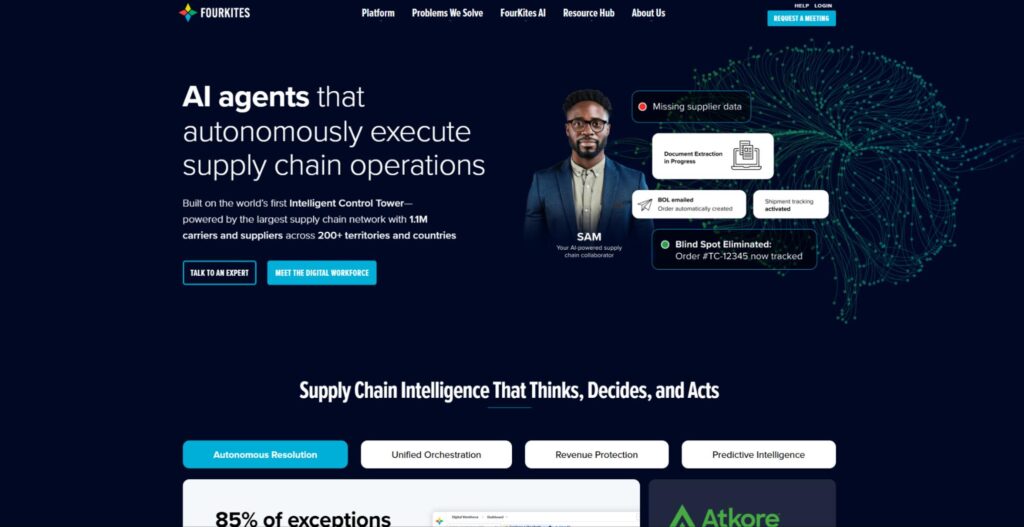
FourKites specializes in live shipment visibility, offering automated updates, container tracking, and predictive alerts.
Many teams use FourKites to avoid demurrage, detention, and missed cut-offs by identifying issues early. The platform brings port conditions, vessel schedules, and exceptions into a single view, giving operators the context they need to act quickly.
Freight forwarders and shippers rely on FourKites to simplify planning and reduce delays in ocean freight. Because everyone sees the same timelines and exceptions, communication between partners improves and escalations become easier to manage.
Best for: Supply chains needing live multimodal visibility.
7. Project44
Project44 is an advanced visibility platform that provides real-time tracking across the supply chain for all major transport modes.
Its predictive ETAs help teams plan around delays and manage exceptions before they escalate. Operators value Project44’s deep carrier network, which improves data accuracy and reduces blind spots across lanes and regions.
Shared visibility allows partners to coordinate more effectively, without relying on long email threads or constant status calls. In general, Project44 helps forwarders simplify planning during peak seasons by surfacing risks early and giving teams more time to respond.
Best for: Teams needing consistent, multi-modal visibility.
8. Freightos WebCargo
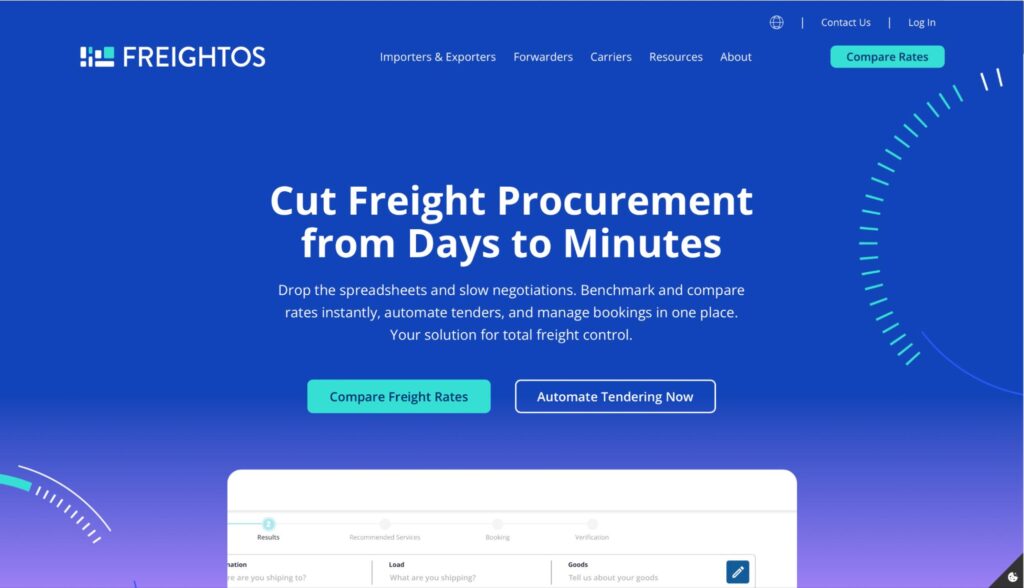
Freightos WebCargo is a digital marketplace for air and ocean rates, offering instant quotes and bookings in one interface.
Freight forwarders use WebCargo to compare carriers without manually checking dozens of rate sheets. The platform provides real-time capacity, schedules, and pricing so teams can secure space and book faster.
Because bookings are handled through a single, structured interface, WebCargo helps reduce errors and keep data consistent. As more carriers join the platform, forwarders gain broader coverage for both air and ocean freight. Freightos also supports e-AWBs and digital documentation, helping keep workflows organized and fully digital.
Best for: Teams needing quick rate comparison and booking tools.
Compare leading Freightos alternatives for 2026.
Freight Automation Tools Comparison Overview
Many teams now rely on freight automation tools to cut manual work and stabilize their supply chains. These platforms allow freight forwarders to manage quotes, bookings, and document workflows without slowing down day-to-day operations. Because they integrate with existing systems, they keep processes simple, reliable, and easier to scale. Here’s a high-level overview of the tools we covered:
| Tool | Supported Transport Modes | Automation Capabilities | Integrations |
Ideal Users |
| Wisor | Air, Ocean, Road | Quoting, Booking, Routing, Documentation | Carrier APIs, TMS, ERP, Email Parsing | Freight Forwarders |
| CargoWise | Air, Ocean, Road, Rail | Quoting, Booking, Compliance, Documentation, Tracking | Global Carriers, ERP, TMS, Customs Systems | Freight Forwarders, 3PLs |
| Flexport Platform | Air, Ocean, Road | Quoting, Booking, Documentation, Tracking, Analytics | Carriers, ERP, Marketplace Integrations | BCOs, Forwarders |
| Magaya Digital Freight Platform | Air, Ocean, Road | Quoting, Booking, WMS, Documentation, Tracking | ERP, TMS, Marketplace, Customer Portals | Freight Forwarders, 3PLs |
| Descartes Systems Group | Air, Ocean, Road, Rail | Routing, Compliance, Documentation, Tracking | Carrier Networks, Customs, ERP | Large Forwarders, 3PLs |
| FourKites | Ocean, Road, Rail, Limited Air | Tracking, Exception Alerts, Documentation | Carrier Integrations, ERP, TMS | BCOs, Retailers, 3PLs |
| Project44 | Air, Ocean, Road, Rail | Tracking, Predictive ETAs, Documentation | Global Carrier Network, ERP, TMS | Forwarders, BCOs, 3PLs |
| Freightos WebCargo | Air, Ocean | Quoting, Booking, Rate Management | Airline APIs, Ocean Carriers (2025), TMS | Freight Forwarders, BCOs |
Types of Freight Automation Tools
Different freight automation tools serve different needs – from quote generation and shipment management to route optimization, cost auditing, and warehouse automation. Together, they help freight forwarders streamline document management, boost operational efficiency, and strengthen both carrier and customer relationships.
That’s why it’s essential to understand the main categories and choose the right freight forwarding automation platform mix for your workflows.
- Transportation Management Systems (TMS): A TMS is a core freight automation tool for forwarders. It helps manage shipments across air, ocean, road, and rail while integrating with existing systems to automate booking, quoting, and document management. TMS platforms improve efficiency by optimizing load planning, scheduling, and carrier selection. They also support stronger carrier and customer relationships by delivering instant updates and more reliable shipment execution.
- Freight Audit and Payment Platforms: Freight audit and payment platforms automate the review and settlement of freight invoices. They help forwarders reduce billing errors, control costs, and gain visibility into spend. By integrating with existing systems, these tools track shipments, validate charges, and generate detailed reports. Automation reduces disputes with carriers and strengthens relationships by making invoicing more transparent and predictable.
- Route Optimization Software: Route optimization software analyzes routes and schedules to identify the most efficient options for shipments. With this type of tool, forwarders can reduce fuel costs, shorten delivery times, and avoid missed deadlines. These platforms typically integrate with current systems, adding optimization as an additional layer of intelligence that teams can use. Route optimization is especially important for companies that require the most efficient and cost-effective method for cargo to reach its destination.
- Warehouse Automation Solutions: Warehouse automation tools streamline storage, picking, packing, and inventory management. They integrate with existing systems to automate document management, track stock levels, and coordinate shipments, all with the goal of improving operational efficiency. For forwarders, these tools reduce manual labor, minimize errors, and maintain more accurate records across multiple locations and customers.
- AI-Powered Predictive Logistics Tools: AI-powered predictive logistics tools are rapidly gaining adoption. These solutions can predict delays, optimize routes, and forecast demand based on historical and real-time data. They help forwarders automate document management, shipment planning, and exception handling. By detecting disruptions early, they support proactive decision-making and help teams maintain transparent communication with clients who expect accurate ETAs and honest updates.
Key Features to Look for in Freight Automation Software
Logistics teams depend on automation to reduce manual workloads and push efficiency to the next level. Choosing the right software and the right feature set is critical to reaching those goals. From AI-powered quoting to real-time tracking, the features below support efficiency across the entire supply chain. Here are the key capabilities to look for in freight automation software:
|
Feature |
Description |
Benefits |
| Multimodal Automated Rate Management | Automates rate collection for air, ocean, road, and rail shipments. | Reduces manual work, ensures accurate pricing. |
| Instant Quote Generation With AI | AI-powered tools generate accurate quotes quickly. | Speeds up customer responses and improves workflow. |
| Automated Bookings and Carrier Selection | The system selects optimal carriers and books shipments automatically. | Improves carrier relationships and reduces errors. |
| Shipment Execution and Workflow Automation | Automates planning, approvals, and task coordination. | Reduces delays and improves team productivity. |
| Real-Time Tracking and Milestone Visibility | Provides live updates for all transport modes. | Keeps customer relationships strong and reduces exceptions. |
| Document Automation (BOL, AWB, Invoices, Customs Docs) | Generates and manages shipment documents automatically. | Reduces errors and manual paperwork. |
| Email Parsing and RPA for Operational Tasks | Extracts data from emails and automates repetitive processes. | Saves time and increases accuracy. |
| Cost Reduction and Margin Optimization Algorithms | Suggests pricing and routing strategies for cost savings. | Increases profit margins and efficiency. |
| Integrations with TMS, ERP, and Carrier Portals | Connects software with existing systems and external platforms. | Ensures smooth workflows across the supply chain. |
How to Evaluate and Select a Freight Automation Tool
Selecting the right freight automation tool requires more than just a feature checklist. Freight forwarders should evaluate how each platform will improve workflows, reduce manual work, support AI-driven decisions, integrate with current systems, and scale with future growth. The right choice will drive long-term savings, higher productivity, and better profitability.
- Analyze Current Operational Bottlenecks and Manual Work:
Start by reviewing your existing processes and identifying where work slows down – whether in document management, quoting, booking, or tracking. This helps you pinpoint which automation tools will have the greatest impact. For example, if quoting speed is a major blocker, a platform like Wisor can help by automating rate searches and quote building. Unlocking speed in this area frees teams from repetitive tasks and shortens response times. - Prioritize Tools That Offer End-to-End Workflow Automation:
Look for software that covers quoting, booking, tracking, and reporting in a single system. End-to-end automation reduces manual handoffs and keeps tasks flowing smoothly through the entire shipment lifecycle. This approach improves operational efficiency and allows forwarders to focus on strategic work, such as growing carrier relationships and improving customer relationships, instead of chasing updates. - Check for Global Carrier and Partner Integrations:
When adding new software to your stack, seamless integration is essential. The tool should connect with global carriers, ERP platforms, TMS solutions, and partner systems. Strong integrations reduce data entry, minimize errors, and keep your workflows aligned. Focus on platforms that offer robust, well-documented integrations with minimal downtime and a clear path to adoption. - Evaluate AI Accuracy for Quotes, Parsing, and Prediction:
Fast, accurate quoting is now a competitive requirement. Many platforms, including Wisor, offer AI-driven features such as quote generation, email parsing, and predictive logistics. High AI accuracy reduces manual effort, speeds up decision-making, and supports better planning. Over time, this accuracy compounds into more reliable margins and fewer costly errors. - Assess Scalability for High-Volume Freight Operations:
As freight forwarders grow, they need tools that scale with them. Look for software that can handle increasing shipment volumes, more users, and additional transport modes without performance degradation. A scalable tool helps you maintain service quality as you expand, leading to stronger client relationships and more sustainable growth. - Compare Pricing Based on Volume, Users, and Integrations:
Review pricing models carefully to understand the true cost of each platform. Consider per-user pricing, per-shipment fees, and integration costs. Having a clear view of the total cost of ownership helps you balance ROI with operational needs. The best choice is usually the tool that offers the strongest cost-to-value ratio, delivering advanced features and automation without unnecessary overhead.
Conclusion
Choosing the right freight automation tool is essential for forwarders who want to significantly elevate their efficiency and resilience. Platforms like Wisor stand out with advanced capabilities such as automated quoting, routing, and document management, all while integrating seamlessly into existing systems. By cutting manual work and reducing errors, Wisor helps forwarders strengthen both carrier and customer relationships.
By carefully evaluating features, AI accuracy, scalability, and pricing, logistics companies can build a modern automation stack that simplifies workflows, lowers operational costs, and delivers more reliable, predictable operations across the entire supply chain.